Ridgeline Fence Co.
Composite fencing
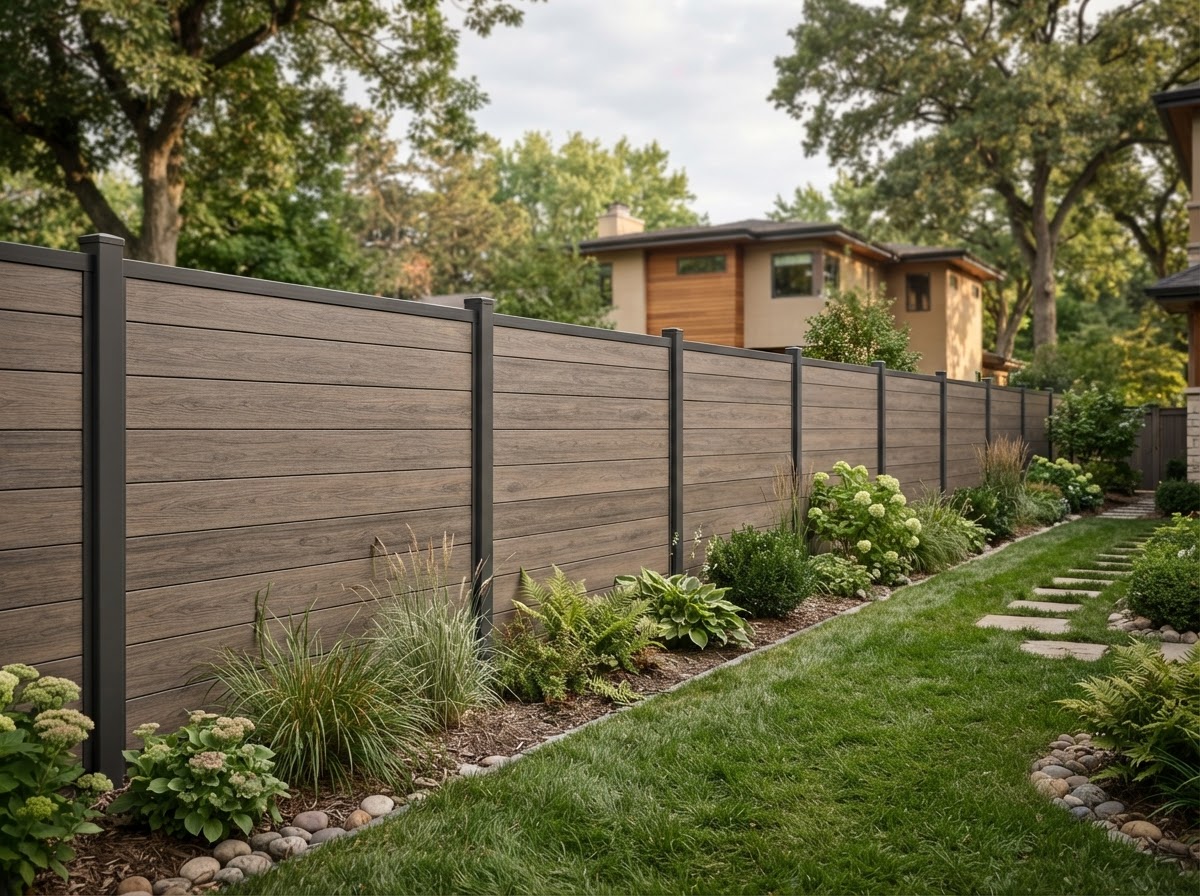
Composite aims to give you the look of wood with far less upkeep. Made from blended materials, panels mimic wood grain while resisting rot, moisture, and insects. Composite characteristics vary by manufacturer, so panel quality, color, and texture differ — we help you compare.
Best for
Where it works
Typical applications for this material or service.
- Privacy where you want a wood look without the upkeep
- Backyard and patio screening
- Property lines in moist or shaded spots
- Low-maintenance decorative boundaries
Benefits
What you get
The practical upsides to weigh.
- Wood-like appearance without routine sealing
- Resists rot, moisture, and insects
- Holds color with minimal fading
- Consistent panels along a long run
Configurations
Styles and options
Common profiles and configurations.
- Solid privacy panels
- Wood-grain textures and colors (by manufacturer)
- Horizontal and vertical orientations
- Cap and trim detailing
Trade-offs
Practical limitations
What to consider before choosing.
- Characteristics vary by manufacturer — quality and look differ
- Upfront cost is typically higher than wood
- Heavier panels need solid post setting
- Repairs usually mean swapping sections
Maintenance
Composite is low maintenance — occasional cleaning, no sealing or staining. Inspect posts and panels after impacts. Because properties vary by manufacturer, we note the specific product's care guidance with your estimate.
Estimate factors
- Composite product and manufacturer
- Total linear footage and height
- Color and texture options
- Post setting and any slope work
- Gates and existing fence removal
Illustrative
Project photography
Illustrative images — replace with real project photos.
FAQs
Composite fencing questions
Practical answers for this service.
Related
Related services
Services that often pair with this one.
Plan composite fencing for your property
Share a few project details and we'll help you choose the right fence for your space — with a clear, written estimate.