Ridgeline Fence Co.
Steel fencing
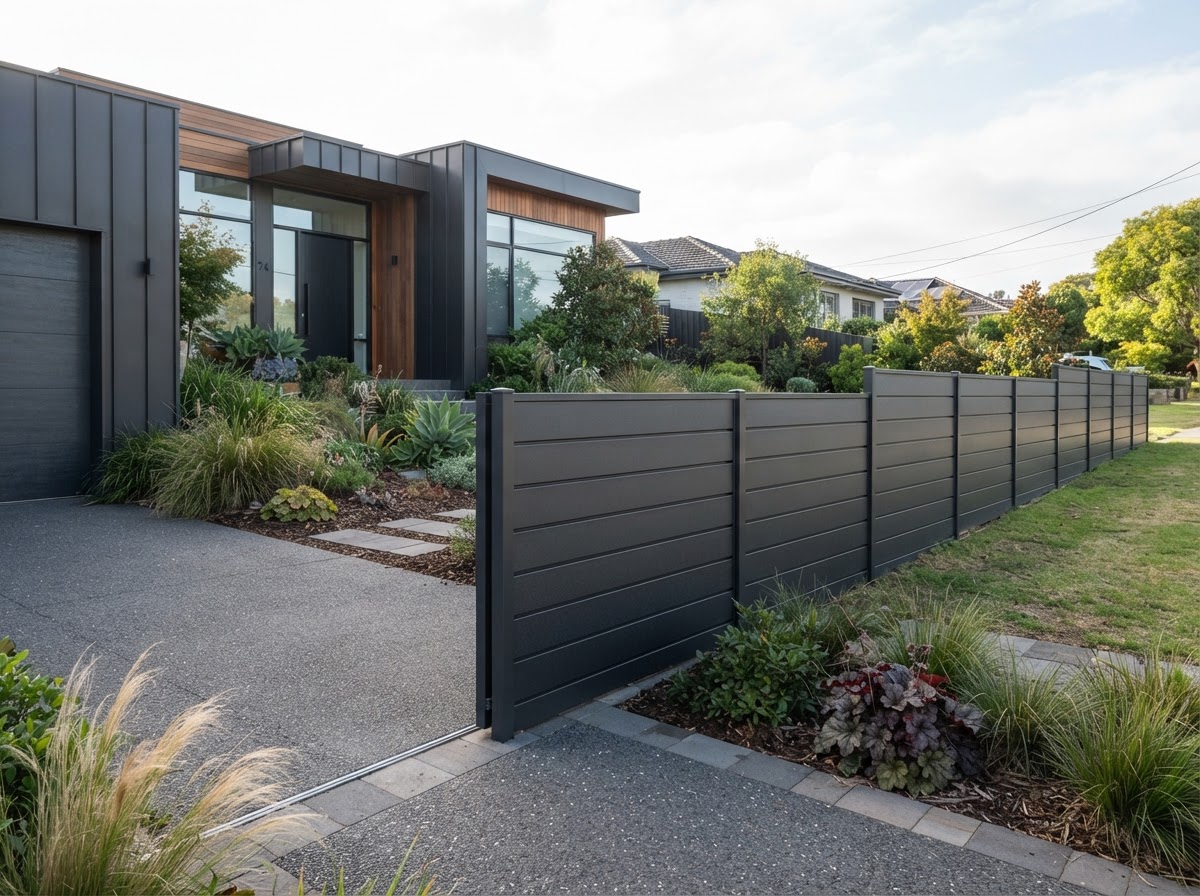
Steel is the strongest of the common ornamental metals. Powder-coated panels deliver a clean, architectural line with real rigidity — a good fit where durability and a modern look matter more than an open picket style.
Best for
Where it works
Typical applications for this material or service.
- Contemporary residential property lines
- Commercial and perimeter security
- High-traffic boundaries that take impact
- Modern architectural statements
Benefits
What you get
The practical upsides to weigh.
- Stronger and more rigid than aluminum
- Clean, modern panel aesthetic
- Powder-coated for corrosion resistance
- Good security with tall, solid panels
Configurations
Styles and options
Common profiles and configurations.
- Flat-top and spear-top panels
- Multiple heights for security or privacy
- Powder-coat color options
- Panel and picket configurations
Trade-offs
Practical limitations
What to consider before choosing.
- Heavier and harder to cut to slope than aluminum
- Open styles offer limited privacy
- Coating must be touched up to prevent rust
- Higher cost than aluminum or chain-link
Maintenance
Inspect the powder-coat for chips and touch up promptly to prevent rust. Rinse occasionally and check posts for movement. Steel needs more attention than aluminum but far less than wood.
Estimate factors
- Panel style and height
- Total linear footage
- Powder-coat color and finish
- Post setting and any grade work
- Gates, including driveway and access gates
Illustrative
Project photography
Illustrative images — replace with real project photos.
FAQs
Steel fencing questions
Practical answers for this service.
Related
Related services
Services that often pair with this one.
Plan steel fencing for your property
Share a few project details and we'll help you choose the right fence for your space — with a clear, written estimate.